
Wild West City: Building Sim
RED BRIX COMPUTER SYSTEMSSimulation
4.5414.00 Reviews
- Version
- 1.0.1217
- Installs
- 100.00K
- Age Rating
- Everyone
Screenshots
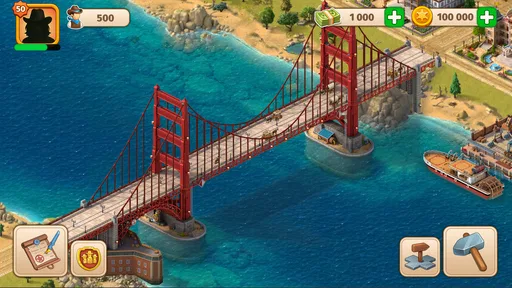
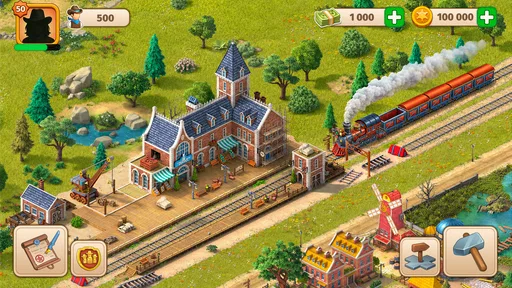
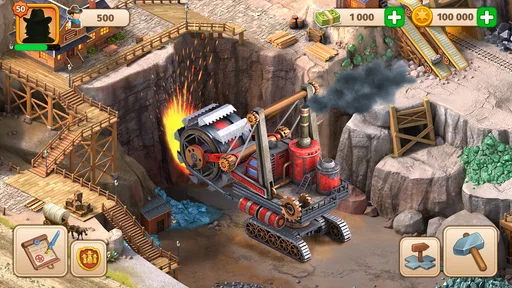
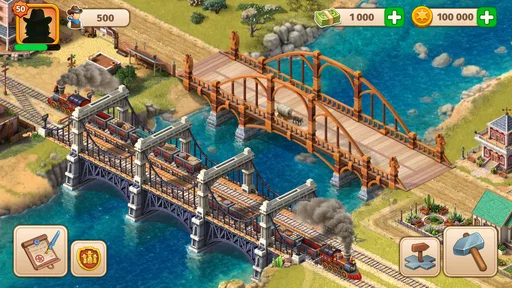
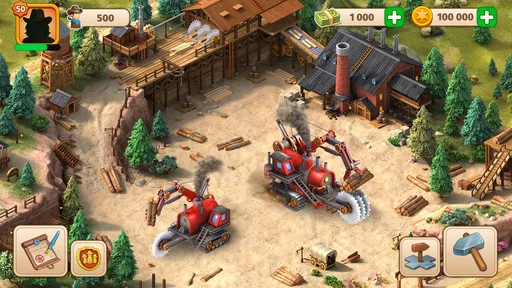
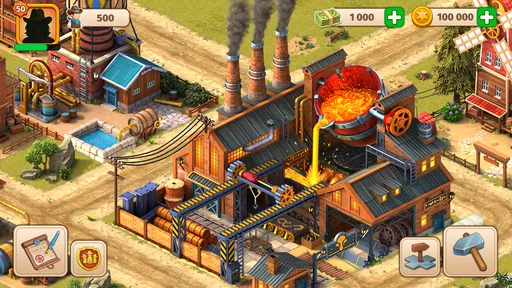
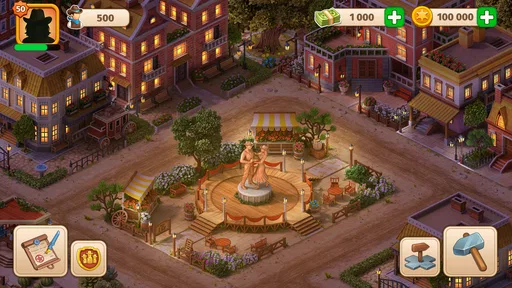
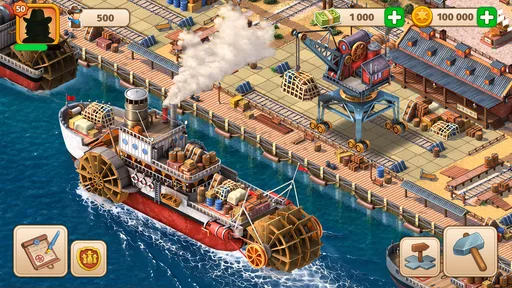
Our Review of Wild West City: Building Sim
 Analysis by Appyee
Wild West City: Building Sim is the kind of simulation game I would suggest to someone who likes turning a small settlement into a busy town one decision at a time. It puts the focus on building a frontier community and managing its growth, rather than on quick reflexes or complicated combat. I found the appeal comes from watching a modest patch of land gradually become a more organized place, then deciding which improvement deserves attention next.
The game is free to start, carries an Everyone age rating, and comes from RED BRIX COMPUTER SYSTEMS. It has reached over 100 thousand installs and holds a 4.5 average from around 12 thousand ratings, which gives it a healthy first impression among players looking for a light town-building experience. The current version is 1.0.1217, and it runs on Android 6.0 or later. Optional purchases range from $1.99 to $119.99 per item, so I would approach the free download with a clear idea of how much, if anything, I want to spend.
What the frontier town feels like to manage
The central pleasure is simple: place construction, improve the settlement, and keep an eye on what the town needs next. That sounds familiar if you have played other builder tycoon games, but the Wild West setting gives the routine a more distinctive personality. Instead of managing a modern city full of traffic systems and dense infrastructure, I am thinking in terms of a developing frontier community where every new structure makes the settlement feel more established.
I like this slower sense of progress. A new player does not need to understand a huge economic model before making a useful move. The early game is more approachable when treated as a sequence of small decisions: complete the available construction, inspect what has become available, and resist the urge to spend every resource immediately. That last point matters. The temptation in a building game is to improve everything at once, but a little patience makes it easier to see which upgrade is actually helping the town move forward.
The presentation also makes the game suitable for short sessions. I can open it when I have a few minutes, complete a construction task, check the settlement, and leave without feeling that I have abandoned a complicated real-time operation. At the same time, there is enough planning to reward longer sessions when I want to think about the order of improvements rather than simply tapping through them.
Players who enjoy city-building games but prefer a lighter frontier theme should feel at home here. It is less intimidating than a detailed urban simulator, while still offering the satisfaction of arranging a growing community. On the other hand, anyone searching for deep political choices, realistic logistics, or a demanding economy may find the experience too streamlined. This is a builder tycoon designed around accessible progress, not a full historical reconstruction of the Old West.
What I would expect before installing
I would go in expecting a casual management loop, not an action game. The important question is usually not whether I can react quickly, but whether I can make sensible choices about construction and development. That makes it a good fit for relaxed play, especially if I enjoy seeing visible changes accumulate over time.
The free entry point is useful for testing that loop without committing money first. Still, the purchase range means I would not assume every shortcut or optional improvement will be free. My practical advice is to play long enough to understand the normal pace before deciding whether an in-app purchase adds genuine convenience. If I already know that I dislike timers, resource planning, or repeating upgrade cycles, the Wild West theme alone probably will not change my mind.
The Everyone rating also makes it easier to recommend for family-friendly gaming, although I would still explain that the game is about managing a settlement rather than offering a story-driven cowboy adventure. Someone expecting duels, exploration, or a large narrative campaign could install it for the wrong reason. The title suggests the setting; the actual experience is centered on building and administration.
Getting started without wasting the early game
My first recommendation is to treat the opening as a tutorial in priorities rather than as a race. Follow the available construction direction, but pause briefly after each meaningful change. Look at what the town now appears to need and consider whether the next action improves the settlement broadly or only makes one part look more advanced. That small habit prevents the early game from becoming a string of automatic taps.
When I begin a new builder, I usually want to spend resources as soon as I receive them. Here, I find it more useful to keep a small reserve when possible. A reserve gives me room to respond when a new construction opportunity appears, and it reduces the frustration of reaching an interesting step only to discover that I have committed everything to a less important improvement.
Another helpful routine is to check the whole town after completing a task. Do not focus only on the building that just changed. The wider settlement is the real project, and a newly completed structure may alter what deserves attention next. This is one of the first non-obvious lessons I would pass to a new player: the best early decision is often the one that preserves your next option, not the one that produces the most visible change immediately.
I would also avoid judging the game by the first few minutes alone. Early construction in this type of simulation can feel repetitive because the town is still small and the choices are limited. That is normal for the setup phase. The appeal becomes clearer once I start making decisions with a developing settlement in mind instead of viewing each building as an isolated objective.
My first meaningful success
The first satisfying milestone is not simply placing one structure. For me, it is completing a short chain of sensible actions: finish an available construction, inspect the town, choose the next improvement deliberately, and leave the settlement in a better position for the following session. That creates a feeling of control, which is more important than rushing toward a large-looking town.
A realistic everyday session might happen during a coffee break. I open the game, check what construction is ready, complete it, and review the settlement before choosing the next task. If I have enough time, I make one further improvement; if not, I stop after setting up a clear next goal. This approach makes the game feel manageable rather than demanding, and it helps me remember what I was doing when I return later.
For a first-time player, I would define success as learning the rhythm of the town. Notice how much attention the game expects, how quickly you enjoy the construction loop, and whether planning the next improvement is satisfying or tedious. That personal test is more useful than trying to progress as quickly as possible.
There is also a psychological advantage to finishing one complete task before jumping between several possibilities. A completed construction gives the session a clear ending, while an unfinished collection of plans can make the game feel busier than it really is. I find the experience more relaxing when I leave with one visible accomplishment and one understandable next step.
Where new players can become confused
The biggest source of confusion is likely to be the difference between a building that looks attractive and a decision that supports continued growth. In a frontier town, visual expansion is satisfying, but not every impressive-looking action is automatically the most useful one. I would keep asking what the town needs next rather than choosing only by appearance.
Another point worth understanding is the relationship between free play and optional purchases. Because the game is free to download, a new player may assume that every part of the progression will move at the same speed without spending. I would not make that assumption. The available purchase range shows that optional spending is part of the experience, so I would decide on a personal limit before playing for a long period. That keeps convenience from quietly turning into an unwanted expense.
This is also why I would not buy something merely because progress feels temporarily slow. A pause can be a useful moment to reconsider the town’s priorities, and it may reveal that I was pursuing the wrong improvement order. Spending can remove friction, but it cannot replace learning whether I actually enjoy the game’s core loop.
Players coming from large city simulators may also need to adjust their expectations. Those games often emphasize complex transport, detailed zoning, or extensive economic balancing. Wild West City: Building Sim is better approached as a more accessible builder tycoon with a strong setting. Its advantage is that I can understand the immediate goal quickly; its trade-off is that players wanting many interacting systems may eventually want something more elaborate.
Compared with a purely decorative settlement game, this one is more appealing when I want construction to feel like management rather than simple customization. Compared with a hardcore management simulator, it is easier to enter and less mentally demanding. That middle position is its clearest strength, but it also defines its limits. It is not the best choice for someone who wants either a completely free-form design tool or a highly technical economic challenge.
Practical habits that improve the experience
First, I would make a short mental note before closing the game: what has just been completed, what appears to be the next priority, and what resource I should avoid spending casually. This takes only a moment and makes returning to the town much smoother.
Second, I would use short sessions to evaluate progress rather than trying to force a long play period. The game’s town-building structure works well when I let improvements accumulate. Pushing too hard can make the process feel like administrative work, especially if I am checking every possible action without a clear objective.
Third, I would separate visual satisfaction from strategic value. A larger or more noticeable construction may be fun to see, but a quieter improvement can leave the settlement better prepared. This is a useful trade-off in any builder, and the frontier setting makes it especially tempting to chase the most recognizable buildings first.
Finally, I would keep the current version in mind when troubleshooting my expectations. The game is at version 1.0.1217, so I would judge it as an evolving release rather than assume it has the breadth of a long-established city simulator. That does not make it a poor choice; it simply means I would value the current core loop for what it offers instead of expecting every advanced system found elsewhere.
Who should play and who should skip it
I think Wild West City: Building Sim is a good match for players who enjoy gradual progress, compact management decisions, and a themed settlement that becomes more developed through repeated construction. It is especially suitable for someone trying the simulation category for the first time because the frontier concept is easy to understand and the early goals are not presented as an overwhelming planning exercise.
I would also recommend it to players who want a game that can fit around ordinary routines. A short visit can still have a purpose, while a longer session gives more room to plan. That flexibility is valuable for me because I do not always want a game that demands uninterrupted attention.
I would be more cautious about recommending it to players who dislike in-app purchase options, even when a game is free to begin. The listed purchases range from $1.99 to $119.99 per item, and that is a broad enough range for me to set spending boundaries before I get invested. Players who prefer a single upfront purchase with a fully predictable cost may feel more comfortable with a premium alternative.
I would also suggest looking elsewhere if the main attraction is fast cowboy action, a branching story, or a highly realistic city-management model. The Wild West identity is expressed through the town-building premise, not through a replacement for an action western or a complex urban planning simulator. Choosing it for the right reason makes a major difference.
My recommendation after settling in
After spending time with it, I see Wild West City: Building Sim as a friendly entry point into frontier town management. Its strongest quality is the clear connection between small construction decisions and the feeling of a settlement taking shape. I enjoy that I can approach it casually while still making choices that affect how satisfying the next session will be.
The main limitation is equally clear: players seeking deep systems may outgrow its accessible structure. The free-to-play format also deserves attention, because optional purchases can change how comfortable the progression feels for different people. I would not ignore those points, but neither would I let them overshadow the game’s simple strength: it makes building a pocket frontier town easy to understand and pleasant to revisit.
My advice to a new player is to start slowly, complete the first construction goals, and judge the game by how much you enjoy planning the next improvement. Keep a small resource cushion, review the whole settlement after each meaningful action, and avoid spending simply to escape a brief pause. If that rhythm feels rewarding, this simulation can become a relaxing little town project.
For me, the best reason to try it is not the promise of a massive metropolis. It is the modest satisfaction of returning to a settlement, seeing what has changed, and making one thoughtful decision about where it should go next. That makes the free download worth exploring for casual builders, while the clear trade-offs give experienced simulation fans enough information to decide whether this lighter Wild West approach is their style.
Verdict
Strengths of Wild West City: Building Sim
- Relaxed city-building gameplay with an entertaining Wild West theme.
- Simple controls make it easy for new players to start building quickly.
- Decorative options help create a town with a personal style.
- Short tasks provide clear goals during casual play sessions.
- The western setting offers a refreshing change from modern city sims.
Limitations of Wild West City: Building Sim
- Progress can feel slow when upgrades require large amounts of resources.
- Some buildings and features may take considerable time to unlock.
- The gameplay loop can become repetitive after extended sessions.
- Limited space may make town planning feel restrictive later on.
- Frequent resource collection can require regular return visits.
Similar Picks in This Category
View All
Truckers of Europe 3
Wanda Software4.3

Town Building Life Simulator
XGame Global4.2

Fidget Toys Trading・Pop It 3D
Freeplay Inc4.7

Sculpt People
CrazyLabs LTD4.4

Scary Teacher 3D
Z & K Games4.2

Hair Tattoo: Barber Shop Game
CASUAL AZUR GAMES4.3
Frequently Asked Questions
What is Wild West City: Building Sim?
Wild West City: Building Sim is a casual city-building game set in a frontier-era Wild West town. You develop a small settlement by placing buildings, collecting resources, expanding available land, and managing the needs of your growing population. The game combines construction, light resource management, and progression with a western theme, making it suitable for players who enjoy relaxed simulation games rather than fast-paced action.
How do you play Wild West City: Building Sim?
Gameplay revolves around building and upgrading your western town while keeping its economy moving. You typically gather or earn resources, construct useful facilities, complete objectives, and unlock additional improvements as the settlement grows. Planning is important because available space and resources may be limited at certain stages. The experience is generally easy to understand, although later progress can require more patience and careful prioritization.
Can Wild West City: Building Sim be played offline?
Some parts of Wild West City: Building Sim may work without a constant internet connection, particularly basic town-building activities that are already available on your device. However, online access can still be required for advertisements, cloud-related features, updates, special events, or verifying in-app purchases. If offline play is important to you, check the store description and test the game after temporarily disabling your connection, since requirements can change between versions.
Is Wild West City: Building Sim free to download?
Wild West City: Building Sim is generally offered as a free download, allowing players to try the main building experience without paying at installation. Like many mobile simulation games, it may include optional in-app purchases for resources, boosts, or other conveniences, and advertisements may appear during play. These purchases are not necessarily required to enjoy the game, but progress can feel slower if you choose not to use them.
Is Wild West City: Building Sim suitable for children?
The game is usually approachable for younger players because its core mechanics focus on constructing a town, collecting resources, and completing straightforward tasks rather than realistic violence. Nevertheless, parents should review the age rating and privacy information on the relevant app store. Advertising, external links, notifications, and optional purchases may also be present, so parental controls and purchase restrictions are recommended when children use the application.
Play our best games!


